
A would you rather question offers two possibilities: spaghetti for hair or jelly for shoes, a pet dragon or a pet dinosaur. Pick either, suggest something else or pass. There is no answer to get right and no explanation is required.
This page has 175 written prompts in ten groups, followed by ways to use them together. The free Would You Rather browser game has its own ten ready-made pairs. It does not contain all 175 written questions. Animals and Cars offer separate picture-choice decks.
Try a choice together
Read or show both options, then let the player choose how to respond. They could tap, point, speak, gesture or use their usual communication method. Give them time and accept a pass or a different idea. Choosing one of the two displayed options is what advances the browser game; the written prompts can be used more freely.
Try “Would you rather fly like a bird or swim like a fish?” One partner might choose flying and another swimming. Ask a follow-up such as “Where would you go?” only if both want to keep talking. A short choice is already a complete turn.
For a shared group, invite a turn rather than setting a limit on passing. Partners can agree, disagree or change their minds. These prompts are optional play, not a language assessment or a reason to delay communication support.
Play the ten-pair browser version
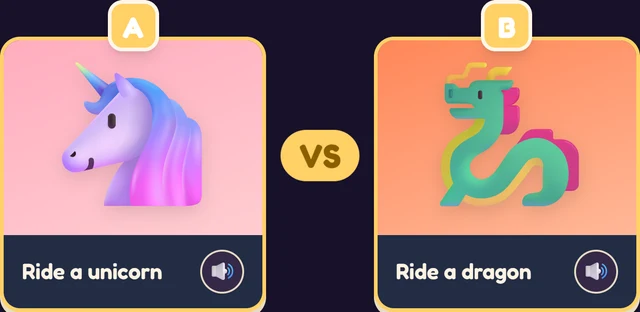
Open Would You Rather, then choose either on-screen card. Touch and mouse selection work, and Left/Right arrow keys choose the corresponding card. The game uses emoji-labelled possibilities such as flying or swimming, riding a unicorn or a dragon, and living on the Moon or under the sea.
Use the on-screen next-step controls after a choice. Some settings offer an optional reason, another round or a finish; you do not need to supply a spoken explanation. Sound settings may speak labels, so preview them before shared play. The prepared labels use synthetic speech.
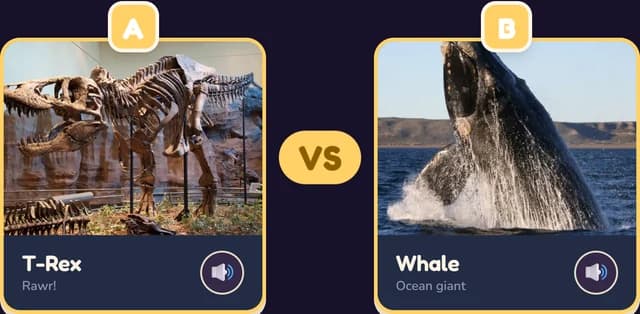
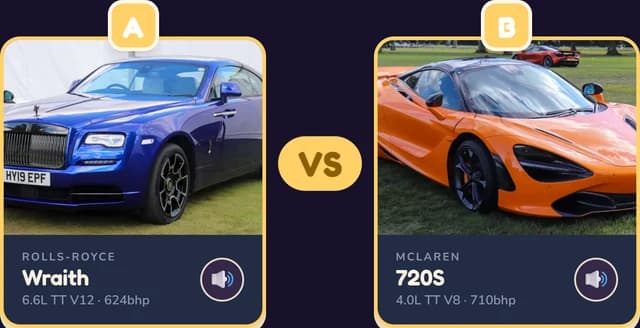
For concrete pictures, open Animals or Cars. Those decks compare pictured options rather than asking all the hypothetical questions below. A finished run can award a favourite-choice sticker on the same browser. A sticker records game progress, not language ability; browser storage can be cleared.
Find a prompt
Funny and silly (20)
Imaginary, silly choices. Skip anything that does not appeal; nobody has to justify an answer.
- Would you rather have spaghetti for hair or jelly for shoes?
- Would you rather sneeze glitter or hiccup bubbles?
- Would you rather sound like a duck when you laugh or a robot when you talk?
- Would you rather have a tail you can wag or ears you can wiggle?
- Would you rather wear wellies in the bath or a snorkel to school?
- Would you rather only walk backwards or only hop on one foot?
- Would you rather have feet for hands or hands for feet?
- Would you rather sing every sentence or whisper everything?
- Would you rather have hair that changes colour with your mood or skin that sparkles in the sun?
- Would you rather wear shoes that squeak with every step or a hat that toots like a horn?
- Would you rather grow daisies from your ears or have a bright blue tongue forever?
- Would you rather smell like cheese or smell like wet dog?
- Would you rather have a sneeze as loud as a lion's roar or a yawn that lasts a whole minute?
- Would you rather be a tiny giant or a giant baby?
- Would you rather slurp cold soup or crunch frozen peas for breakfast?
- Would you rather skip everywhere you go or tiptoe everywhere you go?
- Would you rather wear odd socks forever or your jumper backwards forever?
- Would you rather sleep upside down like a bat or curled up like a snail?
- Would you rather talk in funny voices all day or laugh at everything for an hour?
- Would you rather have a moustache made of feathers or eyebrows made of grass?
Animals (20)
Choose a familiar animal pair or an imaginary adventure. The Animals picture game below is a separate activity.
- Would you rather be a dog or a cat?
- Would you rather ride an elephant or a camel?
- Would you rather have a pet dolphin in your bath or a pet rabbit in your room?
- Would you rather be as fast as a cheetah or as strong as a bear?
- Would you rather meet a real penguin or a real panda?
- Would you rather have a parrot that copies you or an owl that wakes you up?
- Would you rather swim with turtles or fly with eagles?
- Would you rather have a pet that glows in the dark or a pet that purrs you to sleep?
- Would you rather understand what dogs are saying or what birds are singing?
- Would you rather hug a fluffy sheep or stroke a smooth snake?
- Would you rather a fish tank in your bedroom or a bird feeder at your window?
- Would you rather see baby pandas all day or baby ducklings all day?
- Would you rather be a bird that can swim or a fish that can fly?
- Would you rather have a pet hamster that runs an obstacle course or a tortoise that wins slow races?
- Would you rather gallop like a horse or bounce like a kangaroo?
- Would you rather a pet pigeon called Steve or a goldfish called Cuthbert?
- Would you rather have whiskers like a cat or a long neck like a giraffe?
- Would you rather spend a day as a busy bee or a sleepy sloth?
- Would you rather pet a friendly lion cub or a friendly baby elephant?
- Would you rather be friends with a dolphin or a monkey?
Food (15)
These are pretend choices, not instructions about what to eat. Leave out prompts that are uncomfortable or irrelevant.
- Would you rather have unlimited pizza or unlimited ice cream?
- Would you rather only eat sweet foods or only eat crunchy foods?
- Would you rather have chocolate that never melts or biscuits that never go soggy?
- Would you rather drink a milkshake for breakfast or have pancakes for dinner?
- Would you rather a sandwich that tastes like cake or a cake that tastes like a sandwich?
- Would you rather chips with everything or pasta with everything?
- Would you rather an apple that tells jokes or a banana that hums tunes?
- Would you rather never eat sweets again or never eat crisps again?
- Would you rather all your food be blue or all your food be green?
- Would you rather only eat cold food or only eat warm food?
- Would you rather a fizzy drink that never goes flat or a juice that refills itself?
- Would you rather try a new dessert every day or eat your favourite dinner every day?
- Would you rather a giant strawberry or a tiny watermelon?
- Would you rather popcorn that pops in your pocket or candyfloss that never runs out?
- Would you rather a bowl of soup that hums or toast that draws pictures with the butter?
Superpowers and magic (15)
Both answers can be imaginary. An adult can read the options if the player wants.
- Would you rather be invisible or be able to fly?
- Would you rather read minds or see one day into the future?
- Would you rather have super strength or super speed?
- Would you rather teleport anywhere or travel through time?
- Would you rather control water or control the wind?
- Would you rather talk to animals or talk to plants?
- Would you rather breathe underwater or never feel tired?
- Would you rather shrink to ant-size or grow as tall as a tree?
- Would you rather walk through walls or walk on water?
- Would you rather make any drawing come to life or make any toy talk?
- Would you rather pause time once a day or rewind ten seconds whenever you like?
- Would you rather have a magic cape that flies or stretchy arms that reach anything?
- Would you rather grant one wish for the whole world or three wishes just for you?
- Would you rather light up like a torch or glow a different colour for every feeling?
- Would you rather ride a friendly unicorn or a friendly dragon?
School and friends (15)
Do not use an answer to judge a friendship or require a personal disclosure.
- Would you rather have no homework for a term or an extra-long lunch every day?
- Would you rather PE every day or art every day?
- Would you rather sit with your best friend or sit by the window?
- Would you rather a longer playtime or a class trip every month?
- Would you rather be brilliant at maths or brilliant at reading?
- Would you rather a teacher who tells great stories or one who plans great games?
- Would you rather one really close friend or lots of friends you see sometimes?
- Would you rather learn to juggle or learn a magic trick at school?
- Would you rather a school disco every Friday or a film afternoon every Friday?
- Would you rather your class pet be a tortoise or a rabbit?
- Would you rather no spelling tests or no times tables?
- Would you rather learn one new thing really well or ten new things a little?
- Would you rather start school an hour later or finish an hour earlier?
- Would you rather your teacher read in funny voices or draw on the whiteboard all day?
- Would you rather help a new pupil feel welcome or show a friend something you are great at?
Outdoors and adventure (15)
Pick a make-believe trip or a familiar outdoor activity. Staying with a simpler prompt is fine.
- Would you rather climb a hill or paddle in a river?
- Would you rather build a treehouse or dig a den?
- Would you rather camp in the woods or sleep in a tent in the garden?
- Would you rather a long bike ride or a long walk with a dog?
- Would you rather visit the Moon or explore the bottom of the sea?
- Would you rather a hot air balloon ride or a ride in a little boat?
- Would you rather build the biggest sandcastle or the biggest snowman?
- Would you rather go down the longest slide or swing on the highest swing?
- Would you rather find hidden treasure or solve a friendly mystery?
- Would you rather a holiday somewhere sunny or somewhere snowy?
- Would you rather discover a new beach or a new forest path?
- Would you rather make a daisy chain or skim stones on a pond?
- Would you rather fly a kite or blow the biggest bubbles?
- Would you rather a picnic on a hill or a picnic by the sea?
- Would you rather a fort under the stairs or a tent in the living room?
Festive and seasonal (12)
Seasonal experiences vary between families. Skip or adapt unfamiliar celebrations.
- Would you rather build a snowman or have a snowball fight?
- Would you rather decorate a tree or bake biscuits?
- Would you rather jump in autumn leaves or splash in spring puddles?
- Would you rather a cosy winter day indoors or a long summer day outside?
- Would you rather carve a pumpkin or paint one?
- Would you rather watch fireworks or wave a sparkler (safely with a grown-up)?
- Would you rather find chocolate eggs in a hunt or hide them for someone else?
- Would you rather make a paper chain or fold paper snowflakes?
- Would you rather a beach day in summer or a picnic in spring?
- Would you rather wrap a present or unwrap one?
- Would you rather a frosty morning or a foggy morning?
- Would you rather sledge down a hill or build the tallest snow fort?
Tricky brain-teasers (25)
Trade-offs invite discussion if the player wants it. An explanation is optional.
- Would you rather always be five minutes early or five minutes late?
- Would you rather an extra hour every day or an extra day every week?
- Would you rather be the best at something nobody notices, or pretty good at something everyone admires?
- Would you rather always know what is behind a closed door, or what someone is about to say?
- Would you rather be able to fix any mistake once a week, or never make the same mistake twice?
- Would you rather choose your dreams every night, or remember every dream you have had?
- Would you rather travel anywhere in the world for a day, or any time in history for an hour?
- Would you rather have a quiet life full of small joys, or a busy life full of big adventures?
- Would you rather everyone always tell you the truth, or always be kind even when it is not the whole truth?
- Would you rather be brilliant at one thing or quite good at many things?
- Would you rather a superpower that helps only you, or one that helps everyone but not you?
- Would you rather rewind one day, or fast-forward one day?
- Would you rather know how to do anything but be unable to teach it, or teach anything but be unable to do it?
- Would you rather win every game you play, or always enjoy the game whether you win or lose?
- Would you rather a treasure chest you can never open, or an empty box you can fill with anything?
- Would you rather always understand others perfectly, or always be understood perfectly?
- Would you rather lose your sense of smell or your sense of direction?
- Would you rather be famous for being kind, or quietly known for being clever?
- Would you rather a robot that does your chores, or one that helps you learn anything?
- Would you rather speak every language but only whisper, or speak one language but be heard anywhere?
- Would you rather control the weather for a day, or stop time for an hour?
- Would you rather a map that shows where everything is, or a key that opens any door?
- Would you rather always have the right answer but never the question, or always the right question but never the answer?
- Would you rather invent something useful or discover something amazing?
- Would you rather a year of summers or a single perfect snow day that never ends?
Easy two-choice prompts (20)
Shorter options can be shown, read, pointed to or communicated in a familiar way. Neither answer is still an option.
- Apple or banana?
- Cat or dog?
- Red or blue?
- Sun or moon?
- Cake or biscuit?
- Bus or car?
- Bath or shower?
- Park or beach?
- Story or song?
- Run or jump?
- Trousers or shorts?
- Wellies or trainers?
- Crayons or paint?
- Train or boat?
- Big or small?
- Loud or quiet?
- Day or night?
- Tea or juice?
- Soft or fluffy?
- Sweet or salty?
This or that rapid-fire (18)
Use these at any pace. “Rapid-fire” describes the format, not a requirement to answer quickly.
- Pizza or pasta?
- Summer or winter?
- Football or swimming?
- Books or films?
- Drawing or building?
- Mountains or beaches?
- Morning or night?
- Sweet or sour?
- Singing or dancing?
- Cats or dogs?
- Fast or slow?
- Spots or stripes?
- Chocolate or strawberry?
- Indoors or outdoors?
- Quiet or loud?
- Old films or new films?
- Whisper or shout?
- Big group or small group?
Use the questions away from the screen
For a family game, take turns selecting a prompt from a familiar category. In a classroom, one person can read or show a pair while others choose how to respond. There is no required number of questions or fixed session length. Stop or change activity when people want to.
The two choices need not be forced. “Neither,” “both” or a new suggestion can lead somewhere useful in the written version. If pictures would help, use a picture deck or show objects that are familiar to the player. Text, emoji and photographs have different demands; choose the representation that suits the activity.
Keep a favourite for next time
Use the favourite star on a browser game, or bookmark this guide at the prompt group you want to revisit. Local favourites stay on that browser without an account. Visit the family and classroom guide for other shared activities, or the cause-and-effect guide for action-and-response games.
The written prompts are separate from the ten-pair Would You Rather game. All three featured browser decks are free to open without signup. Preview their controls and sound settings with the actual device and access setup before relying on them in a session.


